Tarmac Driveway Planning Permission: UK Rules
If you’re considering having a tarmac driveway installed, you’ll want to know your contractor is complying with all the relevant regulations. One question you might ask is, ‘Do I need driveway planning permission in the UK?’
The short answer is that a tarmac driveway can be installed without a planning application, provided it meets the permitted development conditions. The precise answer, however, depends on the driveway’s location, size, drainage design and the specific characteristics of the property.
Standard tarmac doesn’t normally let rainwater soak through, which makes managing runoff central to deciding whether permission is required, particularly when paving a front garden. In this guide we focus on planning rules in England, but before booking any work, check for property-specific restrictions and confirm any uncertain points with your local planning authority.
When Does a Tarmac Driveway Need Planning Permission?
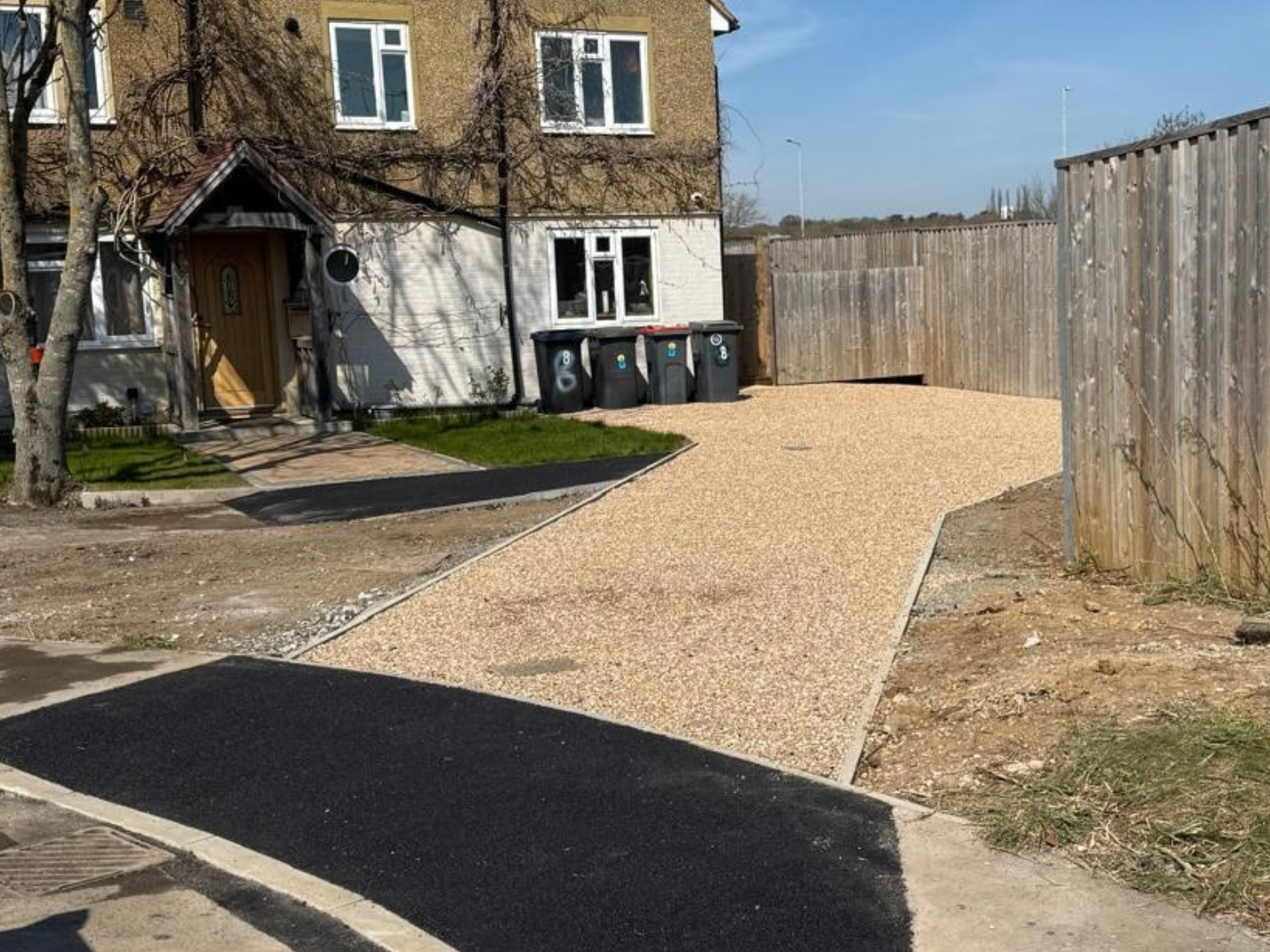
For houses in England, the ‘five square metres’ rule is applied when determining whether a tarmac driveway requires planning permission. This rule concerns hard surfacing between the property’s principal elevation and a public road, and was introduced to mitigate the risks of urban flooding and street drainage pressure. It applies when creating a surface or replacing an existing one.
Where the area to be surfaced exceeds five square metres, permitted development requires either porous materials or provision for runoff to reach a permeable area within the property’s boundary. A conventional impermeable driveway without that provision requires planning permission.
Size alone doesn’t decide the outcome. A larger driveway can meet these conditions if its drainage is suitable, while a smaller project may still encounter other restrictions. Government technical guidance explains this under Class F.
For example, a tarmac parking area draining towards a suitable garden border may satisfy the drainage condition. The same area shedding rainwater straight onto the pavement would not.
When checking tarmac driveway planning permission, also consider whether permitted development rights have been restricted by planning conditions or an Article 4 direction. Householder rights don’t apply to flats and maisonettes in the same way.
Conservation area status doesn’t automatically mean every driveway requires an application. That said, it’s important to check local controls, and seek advice where listed buildings, protected features or associated alterations are involved.
What Is a Permeable Driveway?
A permeable driveway allows rainwater to pass through its surface or joints into a suitably designed structure underneath. Examples include porous asphalt and purpose-designed permeable block paving.
While they can look similar, ordinary tarmac shouldn’t be confused with porous asphalt, as their drainage characteristics differ. Ask your installer to identify the proposed material clearly.
The construction beneath the surface matters too. Permeable paving needs compatible layers that let water move through and provide the necessary support. Simply choosing a porous finish doesn’t make every installation drain successfully.
Permeable paving requires suitable aggregate in its sub-base, bedding and joints. The whole system must work together.
Alternatively, conventional tarmac can direct rainwater towards a lawn, planted border or suitable infiltration system within your property. This offers another approach where the surface itself is impermeable.
However, a drainage channel is only the collection point. Its destination needs to be appropriate. A channel that simply feeds into a sewer doesn’t automatically meet the permitted development requirement.
Why Is Driveway Drainage So Important?
When rain falls on planted ground, some of it can soak into the soil. Replacing this ground with impermeable surfacing changes how water moves, potentially sending more runoff towards roads and drainage networks.
One driveway may seem insignificant, but many paved gardens can collectively increase pressure on drains during heavy rainfall. Government guidance identifies this cumulative effect as a reason for controlling front garden surfacing.
Effective tarmac driveway drainage should therefore be considered before excavation starts. The design needs to establish where water will collect, how it will travel and where it can safely drain.
Suitable arrangements depend on the slope, available space and ground conditions. A garden that already becomes waterlogged should not be assumed capable of absorbing additional runoff.
Likewise, a soakaway needs appropriate positioning and ground that can accept water. Directing runoff towards neighbouring land or building foundations isn’t a sensible substitute for a designed solution.
Ask for an explanation of how the proposed arrangement will perform in heavy rain, alongside any maintenance needed to keep it working.
What About Dropped Kerbs?
Permission for driveway surfacing and approval for vehicle access are separate matters. Even if the driveway qualifies as permitted development, creating or widening a crossing over the pavement may require highways approval.
Kent County Council requires permission before a dropped kerb is installed or extended, or a new access point is used on roads it manages. Other areas may have a different highway authority. The assessment considers practical matters such as visibility, nearby street furniture, trees and pedestrian safety. An existing gap in a boundary doesn’t establish that vehicle access is authorised.
Planning permission may also be necessary for the access itself. For example, Sevenoaks District Council identifies access onto classified A, B or C roads as requiring a planning application.
Speak to the relevant planning and highways teams before agreeing an installation date. Approval from one doesn’t replace approval from the other, and highway works must follow the authority’s requirements.
Planning Your New Tarmac Driveway
Start with a site assessment covering measurements, access, existing surfaces, levels and drainage. Discuss how many vehicles you need to accommodate and whether retaining planting could help manage rainwater.
For tarmac driveway installation in Kent, ask prospective contractors to explain their proposed preparation, materials and drainage arrangement in a written quotation. Request examples of comparable completed work.
The specification should identify excavation, foundation preparation, edging, surfacing and waste removal. It should also clarify any separate access works and who will obtain the necessary approvals.
If you’re replacing an existing drive, ask whether its foundation and drainage remain suitable. Keeping the same footprint doesn’t remove the need to check the proposed replacement against applicable planning conditions.
So, do you need planning permission for a driveway? The answer comes from assessing your particular proposal, rather than relying on the material’s name or a neighbour’s experience.
Tarmac driveway installation with TM Contract
If you’re considering a tarmac driveway in Kent, TM Contract Services Ltd can help. Explore our tarmac driveway installation service and contact our tarmac contractors to discuss your requirements and get a quotation tailored to your property.